
Ever read the words “My God, my God, why have you forsaken me?” and wondered what Jesus meant?
If so, you’re not alone.
This one sentence—shouted from the cross—has sparked centuries of debate, confusion, and deep theological reflection.
So, was Jesus really abandoned by God?
Was He quoting Psalm 22 on purpose?
Or was something deeper happening?
Let’s break it down.
What Does “My God, My God, Why Have You Forsaken Me?” Mean?
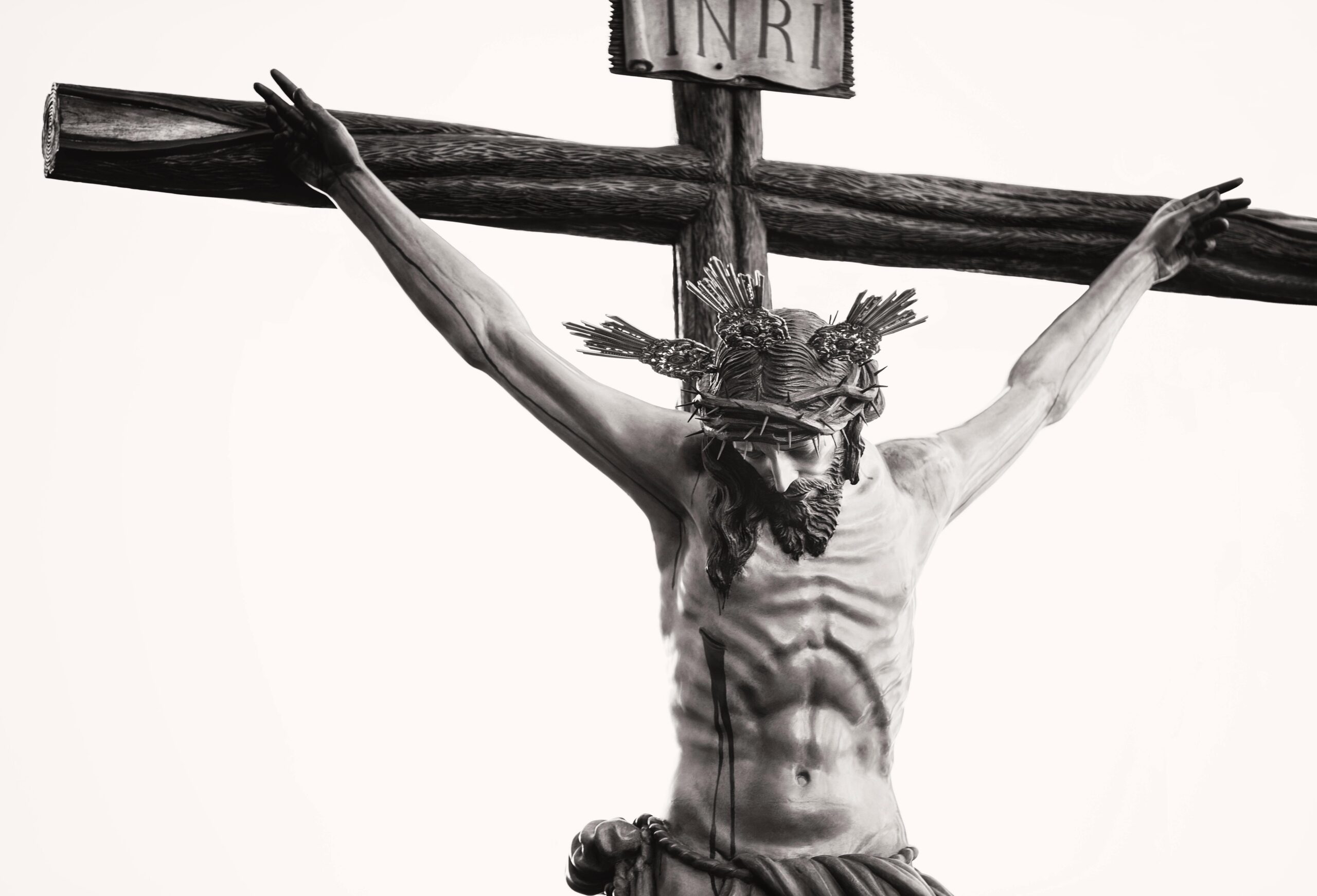
Picture this: Jesus is hanging on the cross, beaten beyond recognition, suffocating.
Then, He cries out:
“Eli, Eli, lema sabachthani?” (Matthew 27:46, Mark 15:34)
(Eli is another name of God – more specifically meaning “my God”)
At first glance, it sounds like He’s in complete despair—like even God turned His back on Him.
But let’s slow down here:
1. Jesus Was Quoting Psalm 22
This wasn’t some random outburst.
Jesus was intentionally quoting Psalm 22:1, which starts:
“My God, my God, why have you forsaken me?”
Now, here’s the kicker—Psalm 22 isn’t just about suffering.
If you keep reading, it prophesies exactly what’s happening to Jesus:
- “They pierce my hands and feet.” (Psalm 22:16)
- “They divide my clothes among them and cast lots for my garment.” (Psalm 22:18)
Sound familiar?
That’s exactly what the Roman soldiers did at the crucifixion.
So, when Jesus shouted those words, He was pointing everyone back to the prophecy.
He was saying:
“Look! Psalm 22 is happening right now. I’m the fulfillment of it!”
2. Was Jesus Really Abandoned by God?
There are typically two main views.
Some say God literally turned His back on Jesus at that moment because He took on the sin of the world.
Others say Jesus just felt forsaken but God didn’t actually turn His face away.
Let’s look at both views.
View 1: Jesus Was Separated from the Father
- The idea here is that when Jesus took on all our sin, He experienced complete separation from God—something He had never known before.
- Some point to Habakkuk 1:13, which says God is “too pure to look on evil,” meaning He couldn’t look at Jesus in that moment.
View 2: Jesus Felt Forsaken, But Wasn’t
- Others argue that God never actually left Jesus, but Jesus—fully human—felt the weight of abandonment like we sometimes do.
- Why? Because He was carrying all of our sin, pain, and separation on our behalf.
So which is it?
The way I understand it is that God did not turn His face away.
If you look at Job 1:6-12, Satan is in the presence of Jesus, and Jesus seems completely unbothered by this.
Satan, being completely evil, doesn’t cause God to turn His face away – because it holds no power over Him.
Also, in Psalm 22:24 (which Jesus references on the cross), it says:
“For he has not despised or scorned
the suffering of the afflicted one;
he has not hidden his face from him
but has listened to his cry for help.”
Scripture seems to support the view that God did not forsake Jesus on the cross.
Plus, Jesus is God, so it doesn’t make sense that there was an actual separation.
Either way, what’s clear is that Jesus’ suffering had a purpose—to bridge the gap between God and humanity, giving us the gift of salvation.
Why Did Jesus Say “My God” Instead of “Father”?
If you’ve read the Gospels, you’ll notice that Jesus almost always refers to God as “Father.”
But not here.
Instead of “Father, why have you forsaken me?”, He says “My God, my God…”
Why?
- It ties back to Psalm 22. Again, He’s quoting scripture.
- It reflects His role as our substitute. He’s standing in our place—fully human, yet fully God, bearing our sin.
Even though Jesus didn’t say “Father, why have you forsaken me?”—many people mistakenly remember it this way.
But His exact words, “My God, My God,” are a direct cross reference to Psalm 22.
The Hidden Victory in Jesus’ Words
Here’s what most people miss: Psalm 22 doesn’t end in despair.
It ends in victory.
By the end of the Psalm, the suffering one declares:
“He has not despised or scorned the suffering of the afflicted one; He has not hidden His face from him but has listened to his cry for help.” – Psalm 22:24
Translation?
God didn’t abandon Him.
Jesus’ cry wasn’t one of defeat—it was a setup for triumph.
What This Means for You
Let’s be real.
Life gets rough.
There are times when it feels like God has abandoned you.
Maybe you’re struggling with loss, sadness, pain, or doubt.
But Jesus knows that feeling.
He experienced it on the cross, along with all the other pain and emotions we as humans feel.
And just like His suffering wasn’t the end of the story, neither is yours.
The cross wasn’t the finish line—the resurrection was.
And that same hope is available to you.
Final Thoughts: The Power of Jesus’ Cry
Jesus’ words on the cross weren’t just about pain.
They were about fulfillment, prophecy, and victory.
So the next time you feel abandoned, remember:
God hasn’t left you.
He didn’t leave Jesus—and He won’t leave you either.
What Do You Think?
- Do you believe God truly forsook Jesus?
- Or was Jesus pointing to something greater?
Let’s discuss in the comments below!
Share this with someone who might need to hear this today.
(For more deep-dive Bible insights, check out our other articles!
FAQs
What did Jesus mean when he said “My God, why have you forsaken me”?
Jesus was quoting Psalm 22:1, a prophetic passage that described suffering but ultimately led to victory. He wasn’t just expressing anguish—He was pointing to the fulfillment of Scripture and the purpose of His sacrifice.
What does Eloi Lama Sabachthani mean?
“Eloi, Eloi, lama sabachthani?” means “My God, my God, why have you forsaken me?” It is recorded in Mark 15:34 and reflects Jesus speaking in Aramaic, the common language of His time. This phrase directly references Psalm 22:1, signaling the fulfillment of prophecy.
What is the meaning of Matthew 27:46?
Matthew 27:46 records Jesus crying out, “My God, my God, why have you forsaken me?” during His crucifixion. The meaning is deeply theological—some believe it signifies Jesus experiencing separation from God as He bore sin, while others argue He was quoting Scripture to point people to the bigger picture of His mission.
What were the last 7 words Jesus said on the cross?
The final sayings of Jesus, known as the “Seven Last Words,” are:
- “Father, forgive them, for they do not know what they do.” (Luke 23:34)
- “Truly, I tell you, today you will be with me in paradise.” (Luke 23:43)
- “Woman, behold your son. Son, behold your mother.” (John 19:26-27)
- “My God, my God, why have you forsaken me?” (Matthew 27:46, Mark 15:34)
- “I thirst.” (John 19:28)
- “It is finished.” (John 19:30)
- “Father, into your hands I commit my spirit.” (Luke 23:46)
What to do when God has forsaken me?
If you feel like God has forsaken you, remember that Jesus experienced that same feeling on the cross—but God never actually abandoned Him. Pray honestly, seek Scripture, and trust that God’s presence isn’t based on feelings. Psalm 22, the very passage Jesus quoted, ends in victory and restoration, reminding us that God never leaves His people.
Is Eli Lama Sabachthani Hebrew or Aramaic?
It is in Aramaic, the common language spoken by Jesus and many in first-century Israel. Matthew’s Gospel records the phrase slightly differently as “Eli, Eli” (closer to Hebrew), while Mark’s Gospel uses “Eloi, Eloi” (more distinctly Aramaic).
What does Jesus call God in Aramaic?
Jesus often called God “Abba,” an Aramaic word meaning “Father,” signifying deep intimacy. On the cross, He used “Eloi” or “Eli,” meaning “My God,” which was part of His reference to Psalm 22.
Is Jesus God himself?
Christian doctrine teaches that Jesus is both fully God and fully man, part of the Trinity (Father, Son, and Holy Spirit). He took on human form to redeem humanity, and while distinct in person from the Father, He shares the same divine nature.
Do I pray to God or Jesus?
Jesus is God, so either works! Jesus taught His followers to pray to the Father, but He also said that prayers in His name are heard (John 14:13-14).
What is God’s real name?
In the Old Testament, God revealed His name as “YHWH” (Yahweh), meaning “I AM.” Other names of God used include Elohim (God), Adonai (Lord), and Jehovah. In the New Testament, Jesus is also referred to as God, emphasizing His divine nature.
Did Jesus know he was God?
Yes, Jesus frequently spoke of His divine nature. He claimed oneness with the Father (John 10:30), said He existed before Abraham (John 8:58), and accepted worship—something only God is worthy of. He knew His mission as the Son of God and the Savior of the world.
Why did Jesus cry out to God if he is God?
As the Son, Jesus was distinct from the Father, even though they share the same divine nature. On the cross, He experienced human suffering and cried out in agony, but He was also fulfilling prophecy. His cry was an expression of both deep pain and divine purpose.
What sin did Jesus commit?
None. Jesus was completely sinless (Hebrews 4:15, 1 Peter 2:22). He bore the punishment for the sins of humanity, but He Himself never sinned.
Does God forsake us when we sin?
No, but sin can separate us from experiencing His presence fully. While God hates sin, He is always ready to forgive when we turn to Him in repentance (1 John 1:9). Jesus’ sacrifice ensures that believers are never truly forsaken by God.